The seven-step pre-dig checklist for UK groundworks
Most utility strikes happen because something got rushed at the start of the shift. A short practical checklist of the seven things a competent person should have lined up before a spade goes in.
By GroundPin team, GroundPin
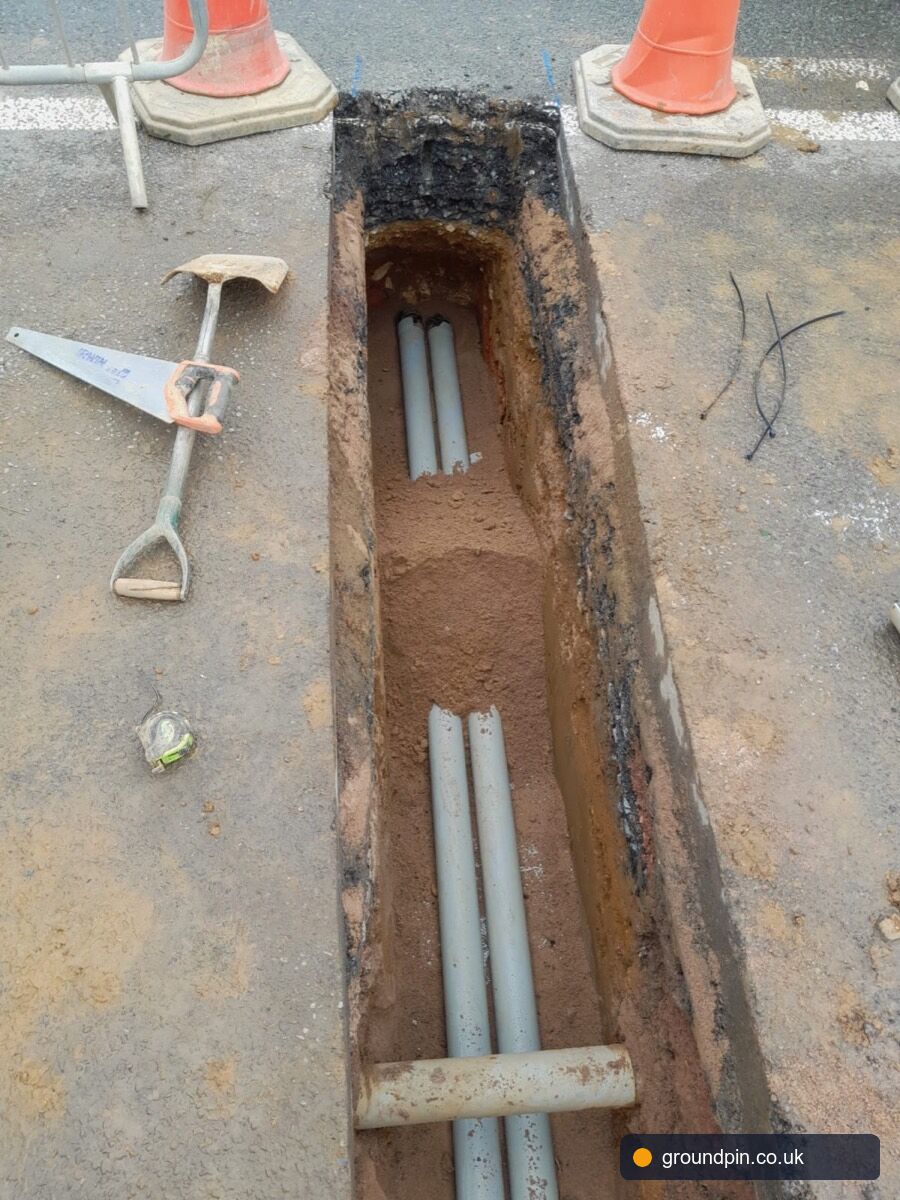
A lot of utility strikes happen because something got rushed at the start of the shift. This is a short, practical checklist of the seven things a site manager or competent person should have lined up before any excavation starts. No special kit. Nothing clever. Just the list.
1. Drawings, hard copy, on site
Not on somebody's phone. Not "I'll check the folder later". The drawings for the area you're about to dig need to be in the cabin, on paper, and somebody on the crew needs to have looked at them in the last 24 hours.
Drawings here means: client-issued record drawings, utility returns (LSBUD and NUAR), as-built drawings from the previous phase, and the design drawing for where the dig's supposed to be.
2. LSBUD and NUAR searches, current
Run within the last 28 days. Further back than that and the picture might have shifted. Printed and in the hazard pack. Why both? Different operators on different platforms. There's a longer piece here if you want the detail.
3. CAT4+ and Genny, both charged, both calibrated
Calibration stickers on, and in date. CAT4+ is the common current model. Older CATs work fine if they've been looked after, but check the calibration. A Genny without a CAT is just a radio. A CAT without a Genny is a passive detector — fine for a quick sweep, not enough on its own.
4. Permit to dig, signed
Most Tier-1 principal contractors require one. Even if yours doesn't, write one anyway. It takes ten minutes and the act of signing forces the signer to actually look at the drawings and the CAT survey.
5. Trial holes where drawings are uncertain
If a drawing says "buried services in this area, exact location unknown", dig a trial hole. Hand dig if the ground is soft enough. Air vacuum excavation if the ground is congested or congested with services. Don't try to guess your way out of uncertainty.
6. Briefing the crew out loud
Not "I told Dave to tell everyone". The ten-minute toolbox talk before the shift starts. What we're digging today. Where the marked services are. Where we're not going near. And a question back: does anyone know anything that isn't on the drawings?
That last one is where crews pick up the "oh yeah, there's a fibre the telco lads dropped in last month" that nobody wrote down.
7. Comms plan for a strike
Not if. When. Write it down before it's needed.
- Who calls the utility's on-call team?
- Who calls the HSE — it's RIDDOR reportable if it's gas or electric with injury risk.
- Who isolates the site and keeps plant and people back?
- Does the plan still work at 18:00 after the rest of the site's gone home?
Pin the plan on the cabin wall physically. A PDF on a laptop isn't any use when a gas service is sheared through and everyone's running.
Running it on a live site
Most good site managers run something like this already. What they don't always do is write the answers down. A checklist on paper with initials and times, kept in the hazard pack, is the thing that HSE and insurers want to see if anything goes wrong.
A clean checklist doesn't mean a strike can't happen. It does mean the response is competent when one does, and the paperwork supports you afterwards.
Where GroundPin fits
Steps 1, 5 and 6 are the three where GroundPin pays back quickest. Pins dropped by the previous phase live alongside the drawings on the dashboard. Trial-hole findings — what you actually saw when you opened the ground — get pinned with a photo. The toolbox talk reads off the map in the cabin rather than memory. If nothing else, having an up-to-date record of what the team has found in the ground means step 6's question gets a real answer.