LSBUD vs NUAR: what's different, and do you need both?
Both are free pre-dig utility search services for UK construction. They work differently, cover different members, and in 2026 most live sites need to use both. Here's why.
By GroundPin team, GroundPin
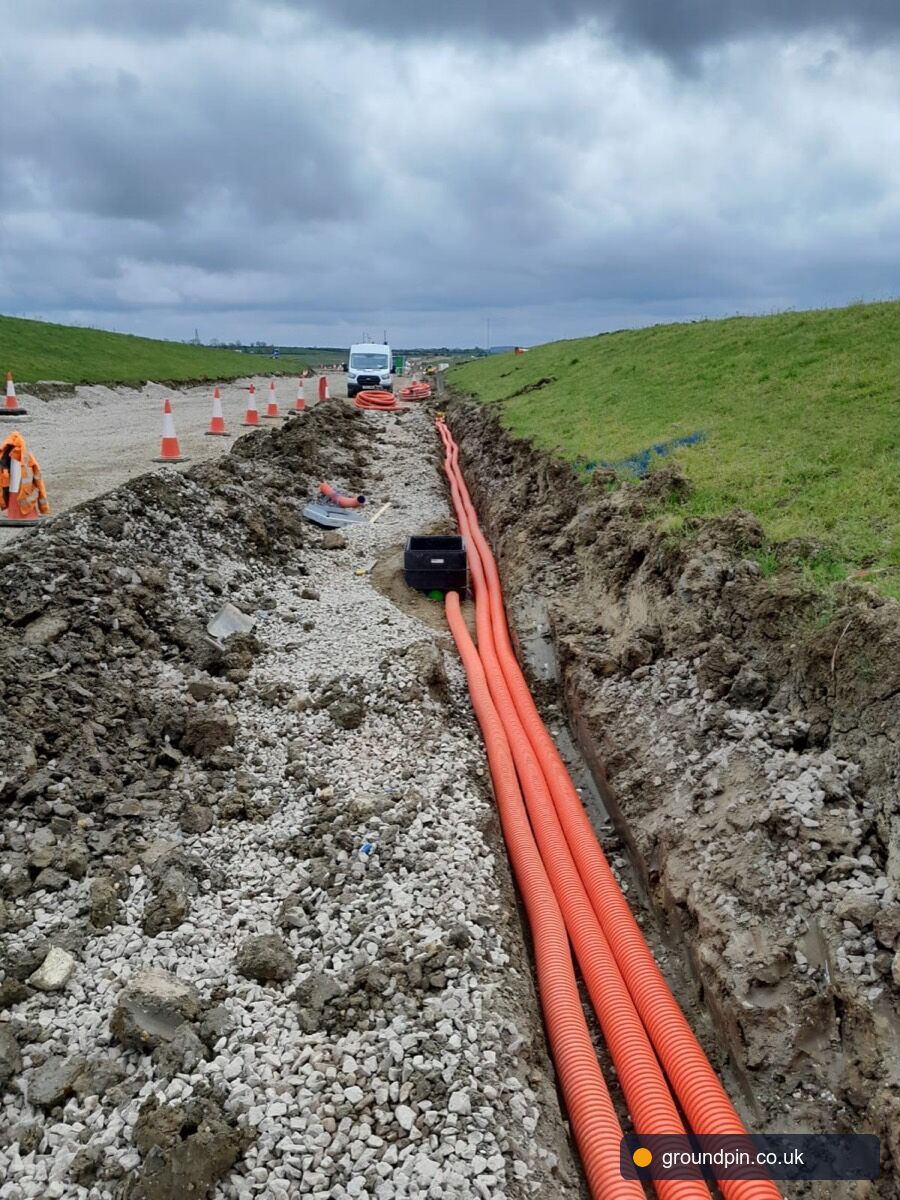
If you've done any pre-dig searching in the last five years you've come across both LSBUD and NUAR. Two services, both free at point of use, both trying to be the thing you check before breaking ground. They sound similar. They're not, quite, and on most live UK sites in 2026 you probably need to hit both. Here's why.
What LSBUD actually is
LSBUD stands for LinesearchbeforeUdig. It's a one-call service, run by a private operator in Berkshire. You submit a search (a polygon on a map, or coordinates with a radius) and LSBUD forwards that enquiry to every member asset owner that's signed up to receive enquiries for the area. Each of those owners then replies directly to you with their drawings.
It isn't a single map. It's more like a mailing list with a coverage map. LSBUD doesn't hold any of the data itself. It fires your enquiry out and the individual utilities email back what they've got.
Membership is the point. If an asset owner isn't on LSBUD, LSBUD won't email them on your behalf, and their assets won't appear in your returns. Most of the big nationals are members: Cadent, National Grid, NGED, Openreach, most water companies. Plenty of local authorities and smaller private operators aren't.
LSBUD is free for enquirers. You register, submit a search, and get responses back. Some are instant auto-PDFs. Others come back manually inside a working day. A live site search usually gets a mix.
What NUAR is
NUAR is the National Underground Asset Register. It's run by the Geospatial Commission, part of the UK government. It went into full live service in 2024 after a couple of years of regional pilots.
The key difference: NUAR holds the data itself. Participating asset owners push records into one shared platform, and authorised enquirers query the platform directly and see a consolidated drawing straight away. No email round-trip. No waiting for Openreach's auto-reply to land before you can put the pack together.
Coverage is growing but still has gaps. Most of the big nationals are in. Local authority coverage is patchy and varies by region. Private networks on business parks and retail campuses are mostly not there yet.
Access is gated. You register as an enquirer, prove you're doing legitimate excavation work, and tie searches to a named site. Free, once you're in.
What's in both, and what isn't
The big national asset owners tend to be in both. A search on a site in central Nottingham will get you Cadent (gas), NGED (electric), Openreach (telecoms) and the relevant water company returns either way.
Where it diverges in practice:
- Local authorities are a mixed bag. Some are in one, some in the other, some in both.
- Private networks on business parks, MOD sites, and retail campuses are patchy on both platforms.
- Network Rail lineside assets aren't surfaced on NUAR (security). You still need a direct Network Rail enquiry for anything within 15 metres of the running line, with a PTS-certified person on the team.
- Very small utilities and private feeders often aren't on either. Those are the ones the CAT and the trial hole catch.
Which should you use?
Both, if the site is live and the stakes matter. The logic is simple. LSBUD catches members who sign up to LSBUD but not NUAR. NUAR catches members who join the government platform and drop their LSBUD subs. The overlap is large, not total.
A search on one might miss an asset that's on the other. The odds of that mattering on any given site are low. The cost of that happening when it does matter is very high. Running both takes about two minutes and costs nothing.
What neither of them tells you
This is the bit that's easy to forget. A successful LSBUD and NUAR search confirms only what's been registered. It doesn't confirm what's actually in the ground.
In older urban areas, and anywhere that's been worked over multiple times, there are unregistered assets. A 16mm water feed to a demolished building from 1974, still pressurised, still there, not on anyone's map. A bit of temporary three-phase left in the ground when a trade compound moved last year. A fibre loop installed by a subcontractor whose paperwork never made it back to the asset owner.
The searches don't find those. A CAT survey might. A trial hole will.
Neither platform replaces on-site verification. LSBUD tells you what the members think is there. NUAR tells you what the participants have registered. Your CAT, your eyes, and your spade tell you what's actually there.
In short
- LSBUD: free, member-driven, works by email. Use as a broad pass, early.
- NUAR: free, government-backed, works by direct platform access. Use alongside LSBUD.
- Client drawings and as-builts from prior phases: always, on paper, in the cabin.
- CAT + Genny: on every dig location before a spade goes in.
- GroundPin (ours): records what your crews actually find in the ground. Because those assets are real, and the only place they usually end up is in your team's collective memory. Put them somewhere the next crew can find them.